Color prototype: a gray village
In Absence of Color the world has lost its colors, and you bring them back. For the first playable prototype we built a small village to see whether this idea holds up in motion.
How the prototype works
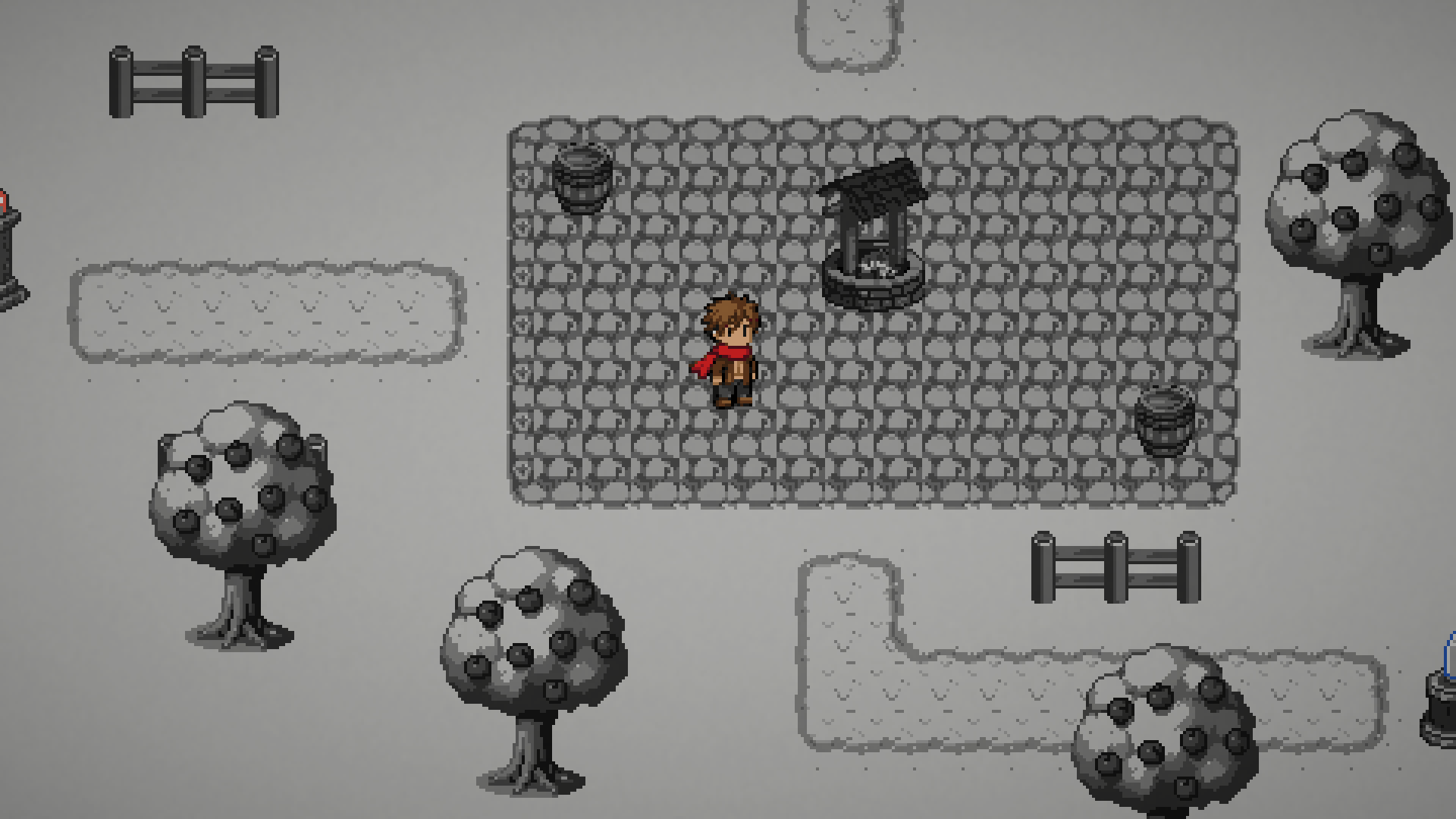
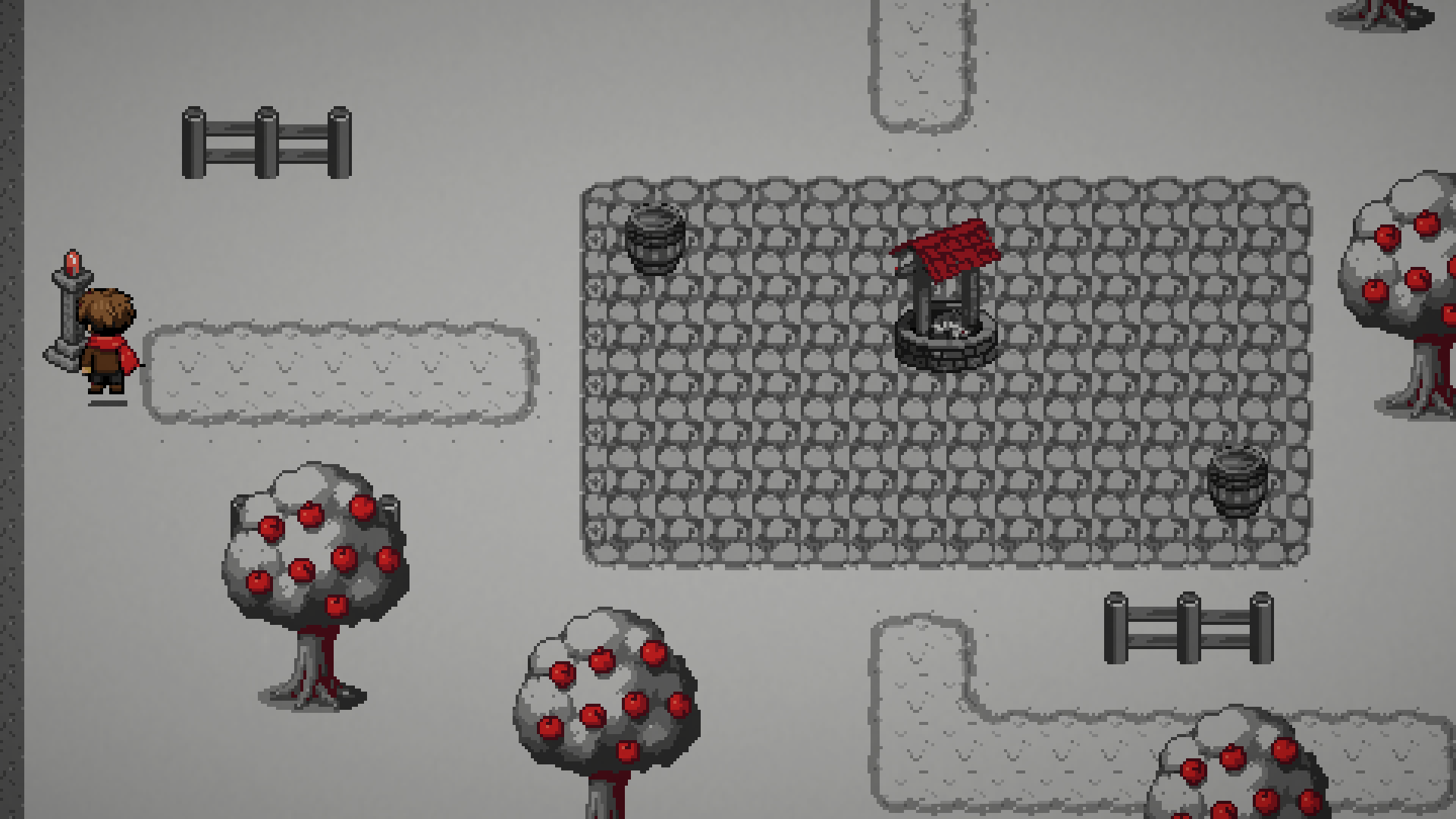
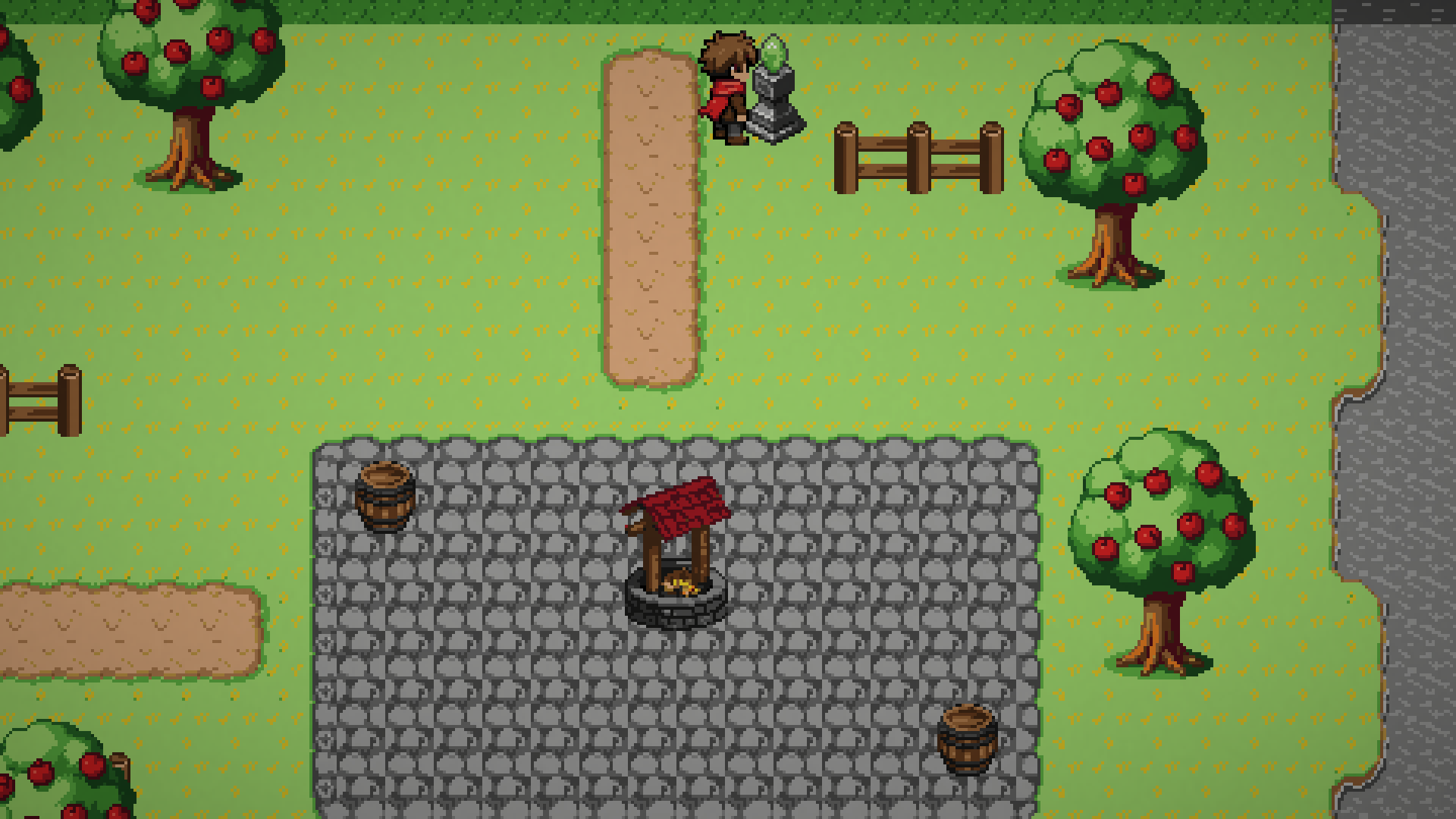
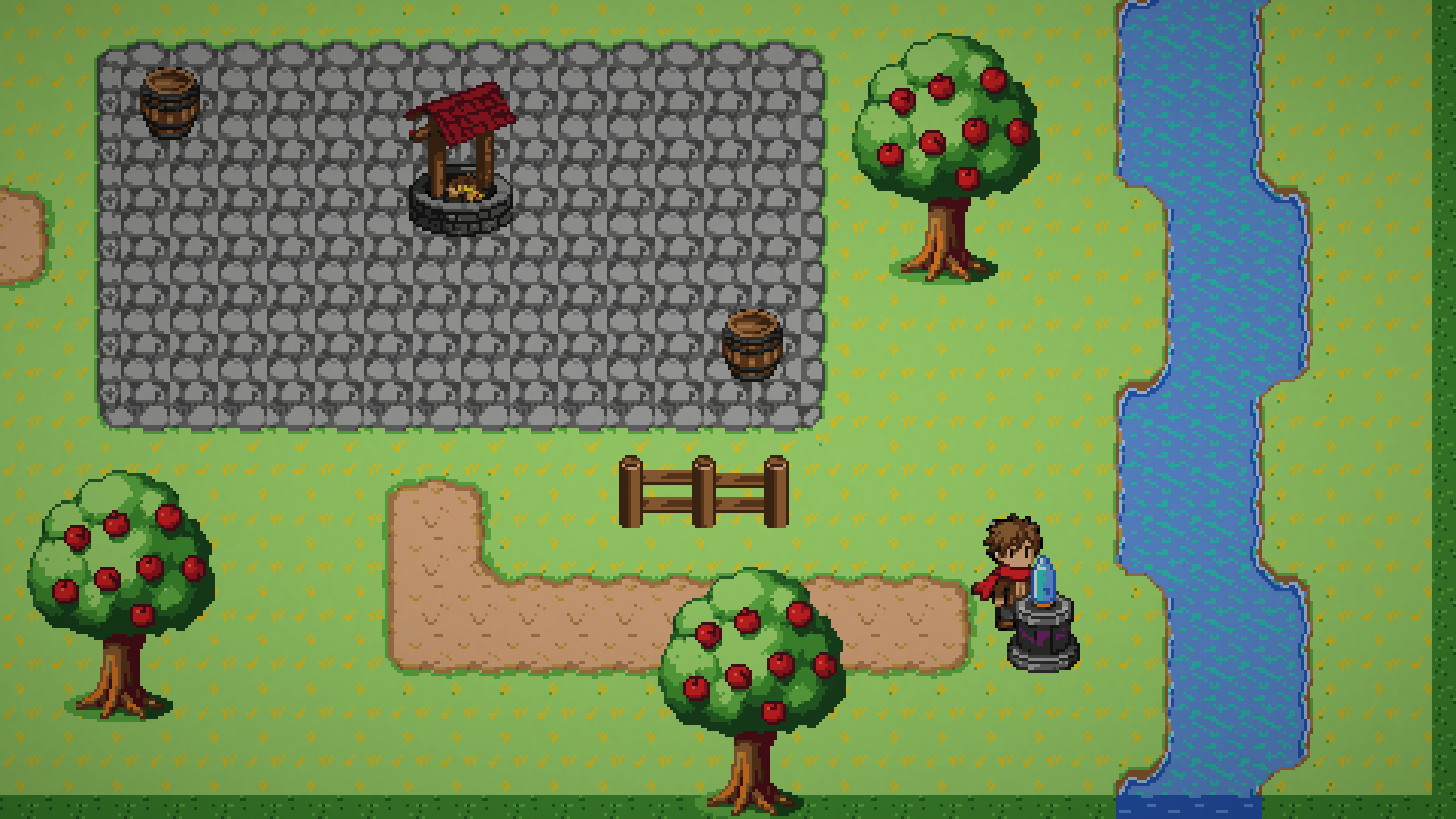
The village starts gray, only the hero is in color. Three shrines stand in the village: red in the west at the end of the dirt path, green in the north beside the path and blue in the south-east by the river. Each one already glows in its own color, so you can see where to go. When the hero reaches a shrine, its color spreads across the village as a wave.
The shrines are stand-ins. In the full game three guardians keep the colors red, green and blue, and you face them.
Mixed colors appear on their own
Every color in the game is made of red, green and blue, like on a screen. We call these three parts color channels. Brown and skin tones need red and green. So wood, paths and the hero’s surroundings change step by step as more channels come back.
What we learned
Full gray was too harsh. Since 7 November the world is therefore no longer gray but faded: locked colors keep 20 percent of their saturation. The hero, the shrines, the enemies and the displays at the edge of the screen always stay in full color, so you can see what matters. The images in this post still show the gray state.
AI notice: AI (Claude) wrote the German original of this post from our project notes; we reviewed and approved it. This English version is an AI translation. The game art in the screenshots and the video is AI-generated placeholder art (PixelLab), not final.